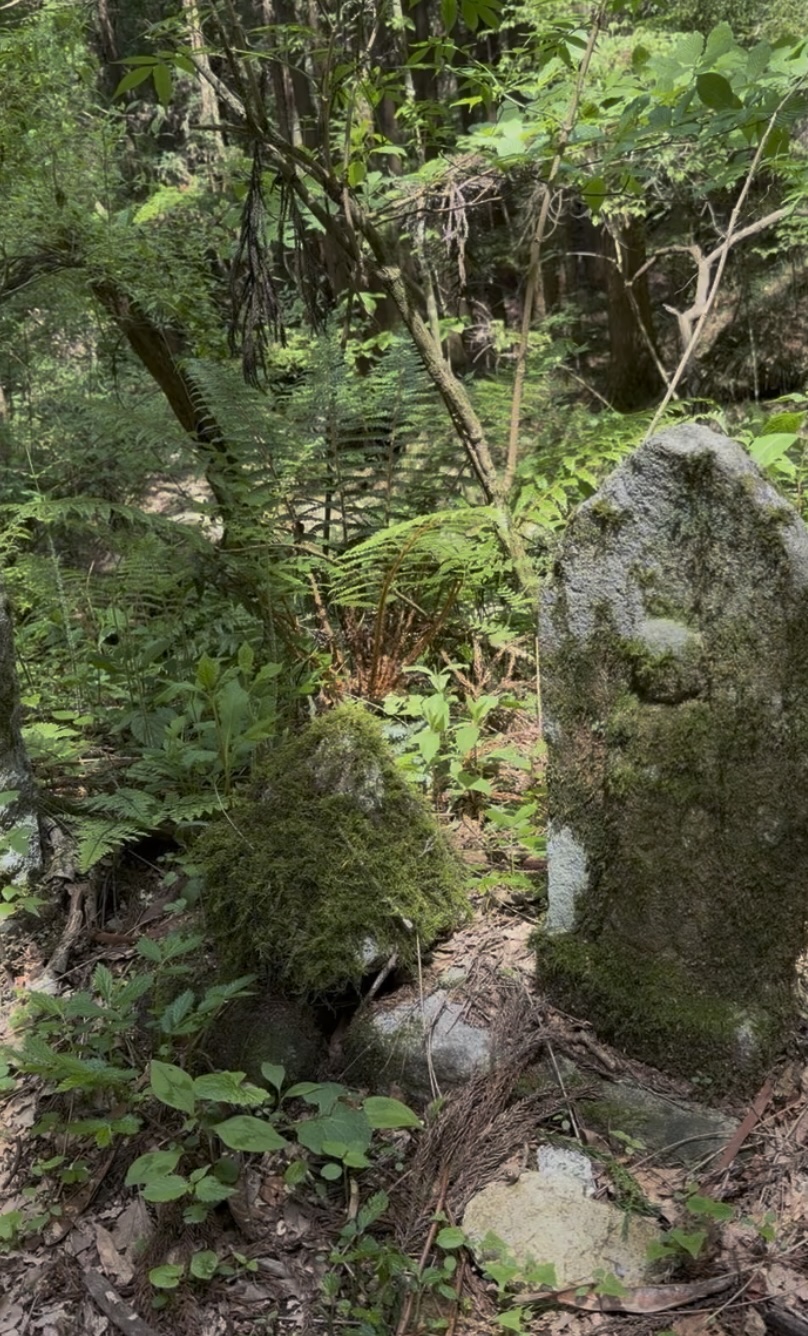
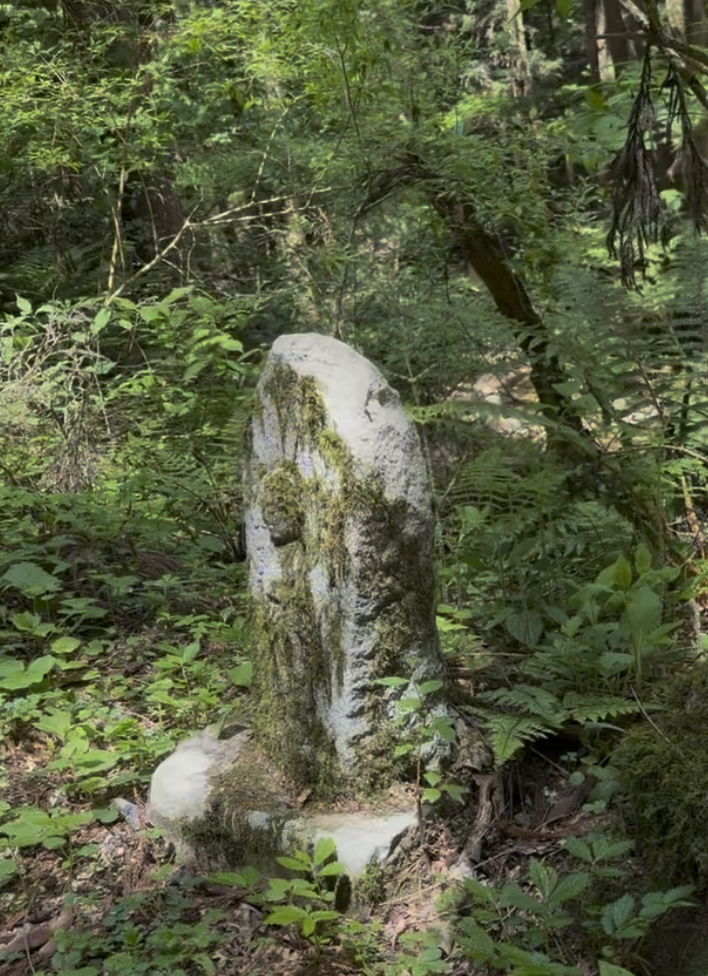
Along the Nakasendo and in temple grounds, you can see stone statues known as Jizo. Many of them have a childlike appearance.
Modern Jizo statues tend to have smooth, well-defined features, while older stone Jizo each have their own simple and distinctive expressions. Many were carved by professional stonemasons, but some were made by ordinary people who could not afford to hire one and had no formal training in stone carving.
A red bib offered to Jizo as an expression of prayer and remembrance.
From the Edo period through the Meiji period, much of Japan’s population lived in rural communities. Life was difficult and medical care was limited, so many children did not survive to adulthood.
In Ryo’s own family, records show that at least four children died at an early age during or before the early Showa period. Records from before the Meiji period are incomplete, so the actual number may have been even higher.
Jizo also became objects of prayer for children who had passed away. People placed red bibs and hoods on the statues as offerings, praying for the souls of those children.
Since ancient times, red has been regarded in Japan as a symbol of life and a color that protects against evil.