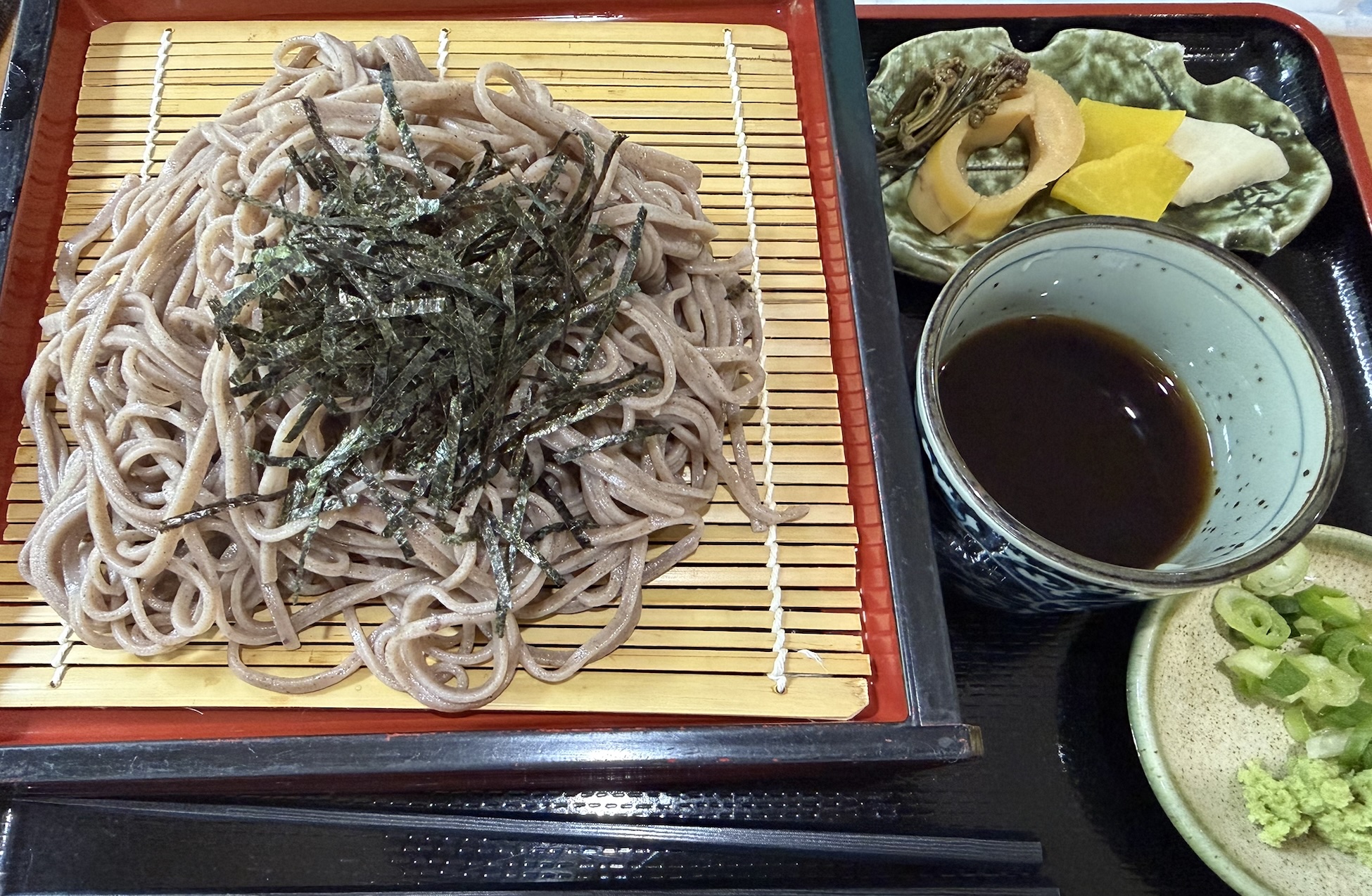
In rural Japan, soba is often regarded as a local specialty, and there are several reasons for this.
Buckwheat is what is known around the world as an emergency crop — a resilient plant with a short growing season that requires relatively little labor and can thrive even in poor soil.
For centuries, it was cultivated as a safeguard against crop failures and food shortages.
In mountainous regions such as Kiso, where flat land suitable for rice cultivation is scarce, buckwheat played an essential role in sustaining local communities.
It served as a vital complement to rice and became deeply woven into everyday life.
The close relationship between Kiso and buckwheat can still be seen today in place names such as Sobatsubu-yama, or “Buckwheat Grain Mountain,” which reflect the crop’s long-standing importance to the region.
Today, most soba served in Kiso is ni-hachi soba, made with 80% buckwheat flour and 20% wheat flour.
This proportion achieves a refined balance between the distinctive aroma of buckwheat and a smooth, pleasing texture.
By contrast, juwari soba, made entirely from buckwheat flour without any binding wheat flour, offers a more pronounced buckwheat flavor.
However, producing excellent juwari soba requires considerable skill and experience.